
How Good the African Team Where in the World Cup
How Good the African Team Where in the World Cup
A complete look at Africa’s greatest FIFA World Cup performances and their lasting impact on global football.
History of African Teams in the FIFA World Cup
African participation in the FIFA World Cup has grown significantly over the decades. Early appearances were limited due to qualification rules, but African football steadily gained recognition as the continent produced increasingly competitive teams.
Egypt became Africa’s first representative at the FIFA World Cup in 1934. Decades later, Morocco made history by becoming the first African nation to advance beyond the group stage in 1986. Since then, countries such as Cameroon, Nigeria, Senegal, Ghana, Algeria, Tunisia, and Morocco have all demonstrated that African football can compete with traditional football powerhouses.
How African Football Has Improved Over the Years
The progress of African football has not happened by accident. Several developments have contributed to stronger performances on the global stage.
- Improved youth academies across Africa.
- Greater exposure of players in Europe’s top leagues.
- Better tactical coaching.
- Investment in football infrastructure.
- Growing experience against elite international opponents.
These improvements have made African teams more disciplined while maintaining the creativity and athleticism that fans admire.
How good the African team where in the world cup during the early years?
In the early decades, African teams often lacked experience at the highest level. Despite this, they regularly challenged stronger opponents with passion and resilience. Their performances laid the foundation for future generations.
The Greatest African World Cup Performances
Cameroon – Italia 1990
Cameroon stunned the football world by defeating defending champions Argentina in the opening match. Led by veteran striker Roger Milla, the Indomitable Lions reached the quarter-finals, becoming the first African nation to do so.
Senegal – Korea/Japan 2002
Senegal defeated reigning champions France in one of the biggest World Cup upsets ever recorded. Their impressive teamwork carried them to the quarter-finals in their debut tournament.
Ghana – South Africa 2010
Ghana came heartbreakingly close to reaching the semi-finals. Their dramatic quarter-final defeat remains one of the tournament’s most memorable matches.
Morocco – Qatar 2022
Morocco delivered the greatest World Cup campaign by an African nation. Victories over Belgium, Spain, and Portugal helped them become the first African team to reach the semi-finals.
How good the African team where in the world cup compared with other continents?
Compared with Europe and South America, African nations have fewer deep tournament runs. However, their competitiveness has increased dramatically. African teams regularly defeat former champions and consistently produce world-class players who excel in Europe’s strongest leagues.
Performance Comparison Table
| Country | Best Finish | Historic Achievement |
|---|---|---|
| Morocco | Semi-finals (2022) | First African semi-finalist |
| Cameroon | Quarter-finals (1990) | First African quarter-finalist |
| Senegal | Quarter-finals (2002) | Defeated defending champions France |
| Ghana | Quarter-finals (2010) | One kick away from semi-finals |
| Nigeria | Round of 16 (1994, 1998, 2014) | Consistent qualification record |
| Algeria | Round of 16 (2014) | Pushed Germany into extra time |
Why African Teams Continue to Improve
Growing International Experience
Most African internationals now compete in Europe’s biggest leagues. This exposure improves tactical awareness, professionalism, and confidence.
Better Coaching
Modern coaching techniques have helped African teams become more organized defensively while maintaining their attacking strengths.
Exceptional Talent Production
The continent continues producing elite players capable of competing with the world’s best. Many African stars are key players for Europe’s leading clubs.
Increasing FIFA Representation
The expanded FIFA World Cup provides additional qualification opportunities, increasing the likelihood that more African nations will reach later tournament stages.
How good the African team where in the world cup based on statistics?
Statistics show steady progress rather than instant dominance. African nations have advanced beyond the group stage multiple times, defeated several former world champions, and produced numerous Golden Boot contenders and award-winning players. Morocco’s historic semi-final appearance represents the strongest statistical evidence that African football has reached another level.
Strengths of African Teams
- Outstanding athletic ability.
- Creative attacking football.
- Technical individual skill.
- Resilience under pressure.
- Strong team spirit.
- Growing tactical discipline.
Challenges That Still Exist
Despite significant progress, African football still faces obstacles that sometimes prevent teams from reaching their full potential.
- Administrative instability.
- Frequent coaching changes.
- Limited domestic investment in some countries.
- Preparation challenges before tournaments.
- Infrastructure differences compared with Europe’s biggest football nations.
Addressing these issues could allow more African teams to challenge for the World Cup title in future tournaments.
The Future Looks Bright
Many football experts believe Africa’s first World Cup champion is only a matter of time. Youth development continues to improve, scouting networks have expanded, and many young African players are now joining elite academies at earlier ages.
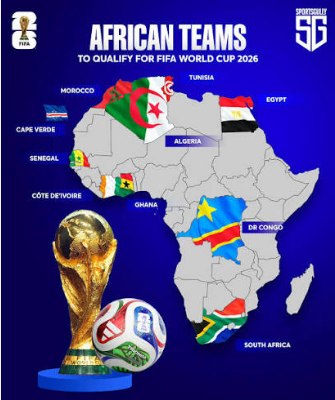
The 2026 FIFA World Cup will feature more participating teams, giving Africa greater representation and increasing the opportunity for historic achievements.
Frequently Asked Questions
1. Which African country has gone the furthest in the World Cup?
Morocco reached the semi-finals in 2022, the best finish by any African nation.
2. Has Africa ever won the FIFA World Cup?
No. However, several African nations have reached the quarter-finals and one has reached the semi-finals.
3. Who was Africa’s first World Cup representative?
Egypt represented Africa in the 1934 FIFA World Cup.
4. Which African player became a World Cup icon?
Roger Milla is widely remembered for his inspirational performances in 1990.
5. Why was Morocco’s achievement historic?
Morocco became the first African team to qualify for the World Cup semi-finals.
6. Which African team defeated France in the World Cup?
Senegal defeated defending champions France in 2002.
7. Why do African teams perform better today?
Improved coaching, stronger youth development, and European league experience have raised performance levels.
8. Can an African country win the World Cup soon?
Many analysts believe it is possible if current progress continues.
9. Which African nation qualifies most consistently?
Nigeria has been among Africa’s most consistent World Cup participants.
Further Reading
For additional historical information, visit the official Wikipedia page on the FIFA World Cup.
You may also enjoy reading our related football guide at https://100suretip.com/sample-football-analysis.
Conclusion
How good the African team where in the world cup can best be answered by looking at decades of consistent improvement, unforgettable victories, and historic achievements. African football has evolved from being viewed as an underdog to becoming one of the world’s most respected football regions. Cameroon inspired a generation in 1990, Senegal amazed the world in 2002, Ghana nearly reached the semi-finals in 2010, and Morocco finally broke new ground in 2022 by reaching the last four.
Although the FIFA World Cup trophy has not yet been won by an African nation, the gap between Africa and the traditional football giants continues to narrow. With stronger youth systems, world-class players, better coaching, and expanded tournament opportunities, the future looks extremely promising. There is every reason to believe that Africa’s greatest World Cup achievement is still ahead.